Valve Hides a Wilhelm Scream in Its Steam Controller
When Valve Hid a Wilhelm Scream in the New Steam Controller
Imagine a technology company that sells millions of products each year. It could settle for technical specifications and classic marketing. Yet some manufacturers choose to insert hidden jokes, cryptic messages, absurd homages to popular culture. That is exactly what Valve has just done with its new Steam Controller, by concealing one of the most famous sounds in cinema history.
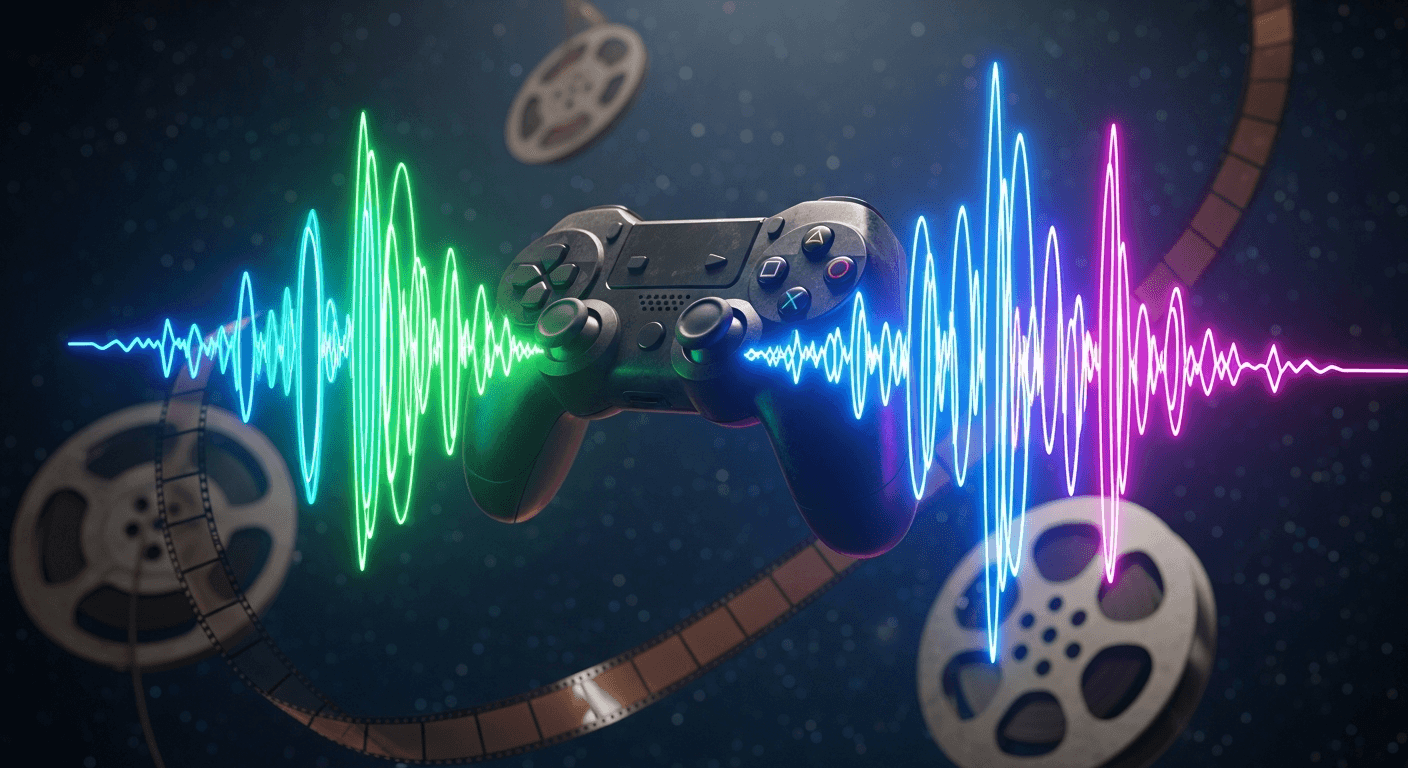
A Reddit user discovered this week that the controller, selling for 100 euros in pre-order, contains a totally unexpected easter egg. If you drop the controller in Big Picture mode — Steam's full-screen interface designed for televisions — a familiar sound rings out. No, not a technical beep nor a banal alert. The Wilhelm Scream. That iconic pain cry, used in over 400 films since 1951, now echoes from your living room when your controller slips between your fingers.
The true genius of an easter egg lies not in its technical complexity, but in its ability to surprise and create an emotional bond with the user.
The Origin of a Legendary Cry: Understanding the Wilhelm Scream
From Distant Drums to Star Wars, a 70-Year History
The Wilhelm Scream owes its name to a soldier named Wilhelm in the film The Adventures of Captain Wyatt (1953), although it was first recorded for Distant Drums (1951). This high-pitched, almost comical cry was reused by chance by a Star Wars sound technician in 1977, then became an insider tradition among Hollywood audio editors. Imagine a production chain where each technical team orally passes this joke to the next, generation after generation.
Today, spotting the Wilhelm Scream in a blockbuster has become a cultural sport. It appears in The Lord of the Rings, Indiana Jones, Toy Story, and even in video games like Red Dead Redemption. Its use no longer stems from chance: it is a code, a sign of recognition between creators who share the same culture. When Valve integrates it into its Steam Controller, it deliberately inscribes itself within this tradition.
Why This Cry Specifically?
The question deserves to be asked. Why not an original sound? Why a 70-year-old public domain sample? The answer lies in what emotional marketing specialists call 'cultural charge'. The Wilhelm Scream carries with it decades of cinematic memories. When a user recognizes it — and only a minority will — they feel a particular satisfaction, that of belonging to an exclusive club. This is exactly the mechanism we exploit in our SEO strategies in Geneva: creating content that rewards deep engagement.
- The cry lasts approximately 1 second, short enough not to be disruptive
- Its average frequency makes it recognizable without being aggressive
- Its public domain status eliminates any legal risk
- Its unconscious association with adventure cinema reinforces Steam's playful image
The Art of the Easter Egg: Marketing Strategy or Internal Culture?
When Company Culture Spills Over Into the Product
Easter eggs generally do not originate in marketing departments. They emanate from development teams, often smuggled in, sometimes tolerated by management. At Valve, a famously horizontal structure known for its absence of traditional hierarchy, the boundary between managerial decision and individual initiative is particularly blurred. The Wilhelm Scream in the Steam Controller could be the work of a cinema-passionate engineer, or an assumed collective decision. In both cases, it reveals something essential about the company's identity.
This approach recalls how we design custom development in Geneva: every technical detail can become a vector of differentiation. A differently placed button, an unexpected animation, a subtle sound — these micro-decisions cumulatively build a memorable overall experience. The Steam Controller does not merely function; it tells a story, even to users who will never discover it.
The Risk Calculation: Between Enchantment and Professionalism
Any company considering adding an easter egg makes an implicit calculation. The risk? Appearing immature, wasting development resources, creating a bug. The benefit? Generating organic buzz, building loyalty among a technical base, humanizing a brand. Valve, with its history of minimalist communication and fervent community, possesses a unique capital of trust. It can afford the absurd because its audience expects it, even demands it.
A well-placed easter egg is often worth more than an advertising campaign: it transforms every user into a potential ambassador, every discovery into a shareable story.
The Reddit discovery is living proof. A single user, a single post, and the information crossed technical networks in a few hours. This organic amplification phenomenon is precisely what organic SEO 2026 strategies aim for when they prioritize authentic content over mechanically optimized content.
Big Picture Interface: The Technical Context of the Wink
Why TV Mode Is the Perfect Terrain
Steam's Big Picture mode represents a long-standing Valve ambition: transforming the PC into a living room console. The interface completely rethinks navigation, font sizes, visual hierarchy. In this context, a 'controller drop' sound is not trivial; it is part of the overall haptic experience. Most manufacturers would opt for a neutral sound, perhaps even clinical. Valve chooses the cinematic reference, transforming a technical incident into a moment of entertainment.
This decision fits within a broader industry trend. Modern interfaces increasingly integrate 'micro-delights' — those small emotional rewards that punctuate a functional interaction. The Wilhelm Scream in the Steam Controller is a micro-delight pushed to the extreme, almost a macro-delight, so dense is its cultural charge. It assumes an attentive, curious user, capable of reconnecting a sound to its cinematic history.
The Hidden Sound Engineering of Modern Controllers
Contemporary game controllers are true audio systems. Integrated speakers, synchronized haptic feedback, headphone output — the sonic experience is now integral to design. Valve has historically innovated in this domain, notably with the precise vibrations of the original Steam Controller. The new model, at 100 euros in pre-order, positions itself in the high-end segment. Its audio easter egg is therefore not a free feature added as surplus: it is a deliberate positioning choice.
- The sound is triggered only in Big Picture mode, not in desktop use
- It requires physical disconnection of the controller, not mere inactivity
- Volume adapts to the general system setting, preserving auditory integrity
- No mention in official documentation, guaranteeing the surprise effect
Implications for the Industry: The Easter Egg as Standard
From Anecdote to Method
The story of the Wilhelm Scream in the Steam Controller might seem marginal. Yet it illustrates a significant evolution in the relationship between brands and technical consumers. In a market saturated with functionally equivalent products, emotional differentiation becomes critical. Easter eggs, once reserved for video games and software, now invest hardware. Imagine a company that systematically evaluates every customer touchpoint as a storytelling opportunity — this is precisely what Valve demonstrates here.
For digital creation teams, this news poses a fundamental question: how to integrate personality without compromising professionalism? Valve's answer is nuanced. The easter egg is hidden, non-intrusive, activated by accidental action. It does not disturb the main journey, it rewards it. This is a principle we apply in our approach to website creation in Geneva: every surprise must earn its place in the overall architecture.
The Future of Emotional Interfaces
As artificial intelligence personalizes our experiences, the easter egg could become an algorithmic object. Imagine a system that detects your cultural sensitivity and adjusts its surprises accordingly. The Wilhelm Scream will not interest everyone; but for the cinephile, it will create a unique bond. The first steps toward this emotional personalization already exist, notably in voice assistants that adapt their tone to the user.
Valve, with its MCP tool and its investments in automation, is particularly well positioned to explore this frontier. Today's Steam Controller could be the prototype of a much richer interaction tomorrow, where every material gesture triggers a personalized narrative response.
Conclusion: When Technique Meets Poetry
The Wilhelm Scream in the new Steam Controller is not just a joke. It is a statement of intent. Through this seemingly insignificant detail, Valve affirms that technology can — must — contain culture, history, humor. In a world where technology products tend toward uniformization, this assertion of singularity deserves attention.
For creators, developers, digital strategists, this news offers a model. The difference does not always lie in visible specifications, but in hidden intentions, in the care given to what few will discover. The best content, the best product, the best experience — they all resist superficial examination and reward deep engagement. This is perhaps the true lesson of Wilhelm's cry, resounding from a game controller toward a silent television, waiting to finally be recognized.
Frequently Asked Questions
What Exactly Is the Wilhelm Scream?
It is a pain cry sound effect recorded in 1951, which became an insider tradition in the film industry. It appears in over 400 films, from Star Wars to The Lord of the Rings.
How Do You Trigger the Steam Controller Easter Egg?
Drop the controller or disconnect it in Big Picture mode, Steam's full-screen interface. The cry will ring out as a confirmation sound.
Is the Wilhelm Scream Protected by Copyright?
No, it has been in the public domain for a long time, which explains its massive distribution and Valve's legal use without licensing fees.
Why Did Valve Choose This Specific Sound?
It is probably a wink to the cinematic culture shared by their teams and part of their community, reinforcing the playful identity of the brand.
Is the New Steam Controller Worth Its 100 Euro Price?
Beyond the easter egg, it promises technical innovations in haptic feedback and customization. The evaluation depends on your specific uses and your attachment to the Steam ecosystem.
Are Easter Eggs Common in Technology Hardware?
They remain relatively rare compared to software, but are gaining popularity. Google, Tesla, and other brands regularly integrate them to humanize their products.