Free YouTube PiP: What Changes for Everyone
Why YouTube: Picture-in-Picture Becoming Free for All Marks a Turning Point
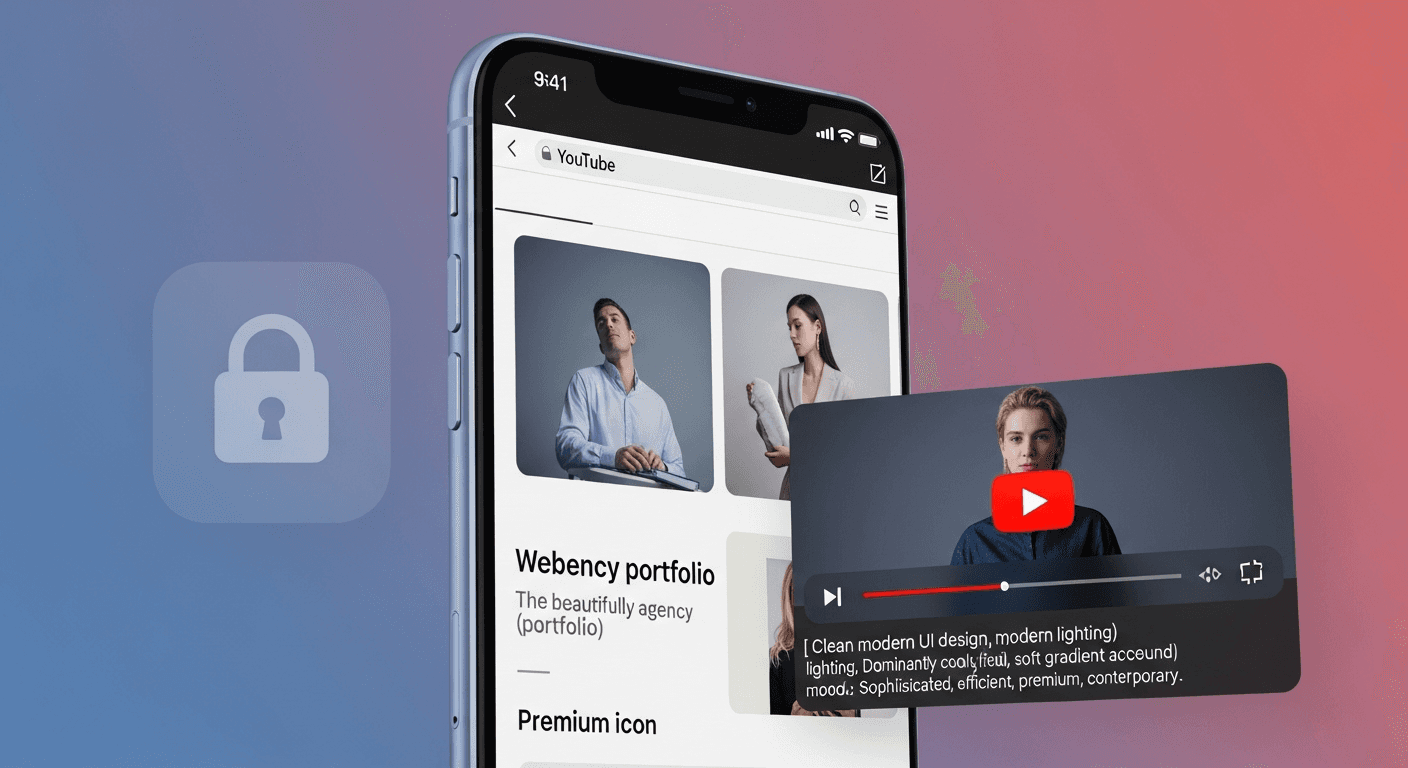
Google has just removed one of the most frustrating locks on its video ecosystem. After years of restriction, YouTube is finally opening Picture-in-Picture (PiP) mode to all its users, with no Premium subscription required. This decision, which now covers both Android and iOS, completely redefines the mobile experience for billions of people. Until now, this feature — native at the operating system level — was artificially throttled by YouTube. An average user either had to pay for Premium or settle for a fragmented experience where video stopped as soon as they left the app. Google's decision fits into a broader strategy: maintaining engagement in the face of fierce competition from TikTok, Instagram Reels, and other streaming platforms that do not impose such barriers. The timing is no coincidence. Users are becoming increasingly demanding when it comes to multitasking fluidity on mobile. Watching a tutorial while answering an email, or listening to a visual podcast while browsing the web, has become standard behavior. By blocking this feature, YouTube risked pushing its audience toward more permissive alternatives.
Pro tip: Picture-in-Picture mode isn't just a convenience — it's an indicator of a platform's retention strategy. Google here chooses mass free usage over immediate Premium revenue.
The Technical Operation of PiP and Its Real Limitations
How Picture-in-Picture Activates on Your Device
Picture-in-Picture leverages a system API present since Android 8.0 (Oreo, 2017) and iOS 14 (2020). This technology allows an application to reduce its visual activity into a resizable floating window, while keeping the media process active in the background. Contrary to what one might think, the constraint did not come from hardware or the system, but from a business decision by Google. Activation is now automatic for most users. On Android, simply exit the YouTube app during video playback — the floating window appears natively. On iOS, behavior is similar, although certain Apple restrictions on background audio create nuances. For users who do not see the immediate change, an app update or settings reset may be necessary. This widespread opening of PiP nonetheless comes with important subtleties. Background audio-only playback remains behind the Premium paywall. The distinction is technical but crucial: PiP maintains the video stream visible (even reduced), while background playback allows turning off the screen or browsing without any visible window. Google therefore maintains clear differentiation to encourage subscription.
Excluded Content and Persistent Territorial Restrictions
Not all content switches to the floating window. Music videos, managed by specific licensing agreements with labels, may still be blocked outside the main app. Likewise, certain geographic regions experience staggered deployment — Switzerland and the European Union are generally prioritized, but with variations according to Google's local agreements. This territorial complexity recalls a reality often forgotten in mobile development: technical globalization constantly runs into legal fragmentation. A team like that of Studio Dahu, our mobile application development agency in Geneva, must regularly architect applications capable of handling these disparities — geolocated feature flags, dynamic configuration caches, and elegant fallback mechanisms.
Strategic Implications for Content Creators and Brands
Fragmented Attention as the New Normal
For YouTube creators, this change represents an opportunity disguised as a threat. On one hand, PiP mechanically increases apparent watch time — a metric the algorithm values. A viewer who listens to your financial analysis while preparing dinner contributes to minutes watched, even if their attention is divided. On the other hand, qualitative engagement suffers. Comments, in-video likes, clicks on description links: all these strong interaction signals become less likely when the user is no longer in the YouTube interface. Creators will need to rethink their retention strategy: hook in the first seconds, prioritize audio as a standalone narrative medium, and structure content to support passive listening. Imagine an online training channel. Before this evolution, a learner had to choose between following the tutorial in full screen or taking notes in another app — real cognitive friction. With free PiP, this same learner can shrink the video, open their code editor or note-taking app, and alternate without friction. The intermediate abandonment rate should logically decrease, but the brand loses the captive attention of the YouTube interface.
Brands that integrate YouTube into their marketing funnel must reevaluate their KPIs. Full-screen completion rate becomes a secondary indicator; post-viewing action (site visit, purchase, signup) becomes the true north.
Opportunities for Cross-Platform Strategies
This change fits into a broader trend we observe at Studio Dahu during our website creation projects: the collapse of application silos. The modern user no longer lives in one app at a time, but in an ecosystem of interconnected tools. A company publishing educational content on YouTube must now design its website, mobile app, and video channel as a continuum of experience, not as isolated channels. The PiP window literally becomes a bridge between these worlds. An e-commerce business can imagine a viewer shrinking a YouTube product review to check technical specs on the merchant site. A B2B service can structure its YouTube webinars to naturally accompany the user toward its SaaS platform. The key: make each touchpoint functionally independent, but collectively coherent.
The Economic Stakes Behind Free PiP
Why is Google giving up such a visible Premium conversion lever? The answer lies in the economics of digitized attention. YouTube Premium has about 100 million subscribers — a respectable figure, but marginal compared to 2 billion monthly active users. Free PiP is an investment in base retention, not a sacrifice of revenue. YouTube advertising revenue depends on time spent on the platform and targeting quality. A user who abandons YouTube for TikTok because the multitasking experience is more fluid there represents a net loss, both in advertising and data. By making PiP universal, Google secures its global attention inventory. Premium subscription remains attractive elsewhere: offline download, ad-free experience, integrated YouTube Music, and yes, still pure background audio playback. This optimized freemium logic is instructive for any digital actor. The question is no longer "what to monetize?", but "what to offer for free to maximize total captured value?" This is exactly the reflection we conduct with our clients during digital consulting sessions — how to structure tiered offers where strategic free usage feeds paid conversion.
How to Leverage Free PiP in Your Digital Projects
Audit Your Existing Video Presence
The universal availability of PiP changes user expectations. If your brand maintains a YouTube channel, immediately audit the audio resilience of your content. A video whose visual narration is essential (interface demonstration, complex graphic tutorial) loses effectiveness in PiP mode. Conversely, dialogued content, an interview, or verbal analysis gains in flexibility. Test your videos in real conditions: launch them in PiP, navigate your own site or app, evaluate whether the message holds without visual support. This exercise often reveals undeclared dependencies on full-screen format. Adapt your editorial calendar accordingly — increase the proportion of "audio-first" content, structure your editing plans with strong audio cues.
Integrate PiP into Your Application Architecture
If you develop a native mobile application, YouTube PiP isn't your only concern — it's a symptom of a generalized expectation. Users now expect this fluidity in every media experience. Our mobile application development team in Geneva systematically integrates native PiP into projects involving video, whether for training, teleconsultation, or event streaming. Technically, this requires mastering AVPictureInPictureController on iOS and PictureInPictureParams on Android, but above all designing the user experience upstream. When video shrinks, what information persists? How does the rest of the interface adapt? PiP isn't an isolated feature, it's a mode of existence for the application that demands global coherence.
For Geneva and Swiss Romande businesses: universal PiP accelerates the convergence between educational content and commercial action. A YouTube video becomes a companion, not a destination. Anticipate this shift in your user journeys.
Perspectives: PiP as Precursor of a New Mobile Era
YouTube's opening of Picture-in-Picture is probably only a prelude. Google regularly tests advanced multitasking features — multiple floating windows, adaptive transparency, cross application-floating interaction. The underlying logic is clear: the smartphone is no longer sufficient as a single screen, it must become a hub of simultaneous activities. For digital professionals, this evolution demands constant questioning. A website designed for full-screen full-attention navigation becomes obsolete facing a user who consumes content while interacting with three other applications. Technical performance — loading speed, responsiveness under shared load, memory management — becomes critical. This is precisely why we often recommend Next.js as technical foundation: its architecture enables ultra-responsive experiences even when user attention is divided. The real upcoming challenge? Artificial intelligence in these fragmented interfaces. When a user consumes content in PiP while interacting with another service, what agent can orchestrate these contexts? Conversational assistants, automatic summaries, contextual suggestions based on cross-activity: this innovation field is vast and still poorly structured. Companies that invest now in this understanding of shared attention will build tomorrow's competitive advantage.
Conclusion: Adapt Your Strategy to the Era of Universal Multitasking
YouTube: Picture-in-Picture Mode Becomes Free for All — this technical announcement masks a deeper transformation of mobile consumption habits. Monolithic attention, captive to a single screen, gives way to a distributed attention economy, fluid, demanding in cross-platform coherence. For creators, brands, and developers, the imperative is threefold: produce content resilient to reduced format, architect application experiences coherent with native multitasking, and measure performance beyond full-screen metrics. PiP is no longer a paid privilege, it's the new baseline of user experience. At Studio Dahu, we support Geneva businesses in this transition — from high-performance website creation to native mobile application development, through strategic digital consulting. The future of digital belongs to those who design for shared attention, not for captivity.
Frequently Asked Questions
Is YouTube Picture-in-Picture Mode Really Free for Everyone?
Yes, Google has lifted the Premium restriction for video PiP on Android and iOS. Only pure background audio playback (screen off, no visible window) remains reserved for Premium subscribers.
Why Was PiP Paid Before?
It was a differentiation lever for YouTube Premium. Google now prioritizes mass retention in the face of competition from TikTok and Reels, at the expense of this immediate revenue.
Do All YouTube Videos Work in PiP?
No, certain music videos remain blocked by licensing restrictions. Geographic deployment is also staggered according to regions.
How Should Creators Adapt Their Content?
Prioritize audio resilience: clear narration, standalone verbal structure, and strong audio cues. Visually complex content loses impact in PiP mode.
Does Free PiP Also Apply to YouTube Music?
No, YouTube Music maintains its specific restrictions. The change primarily concerns the standard YouTube application for general videos.
Does This Evolution Impact Mobile Application Development?
Yes, it normalizes the expectation of fluid media multitasking. Applications integrating video must now master native PiP as standard, not as a premium option.