Web App Geneva: Create your custom business tool
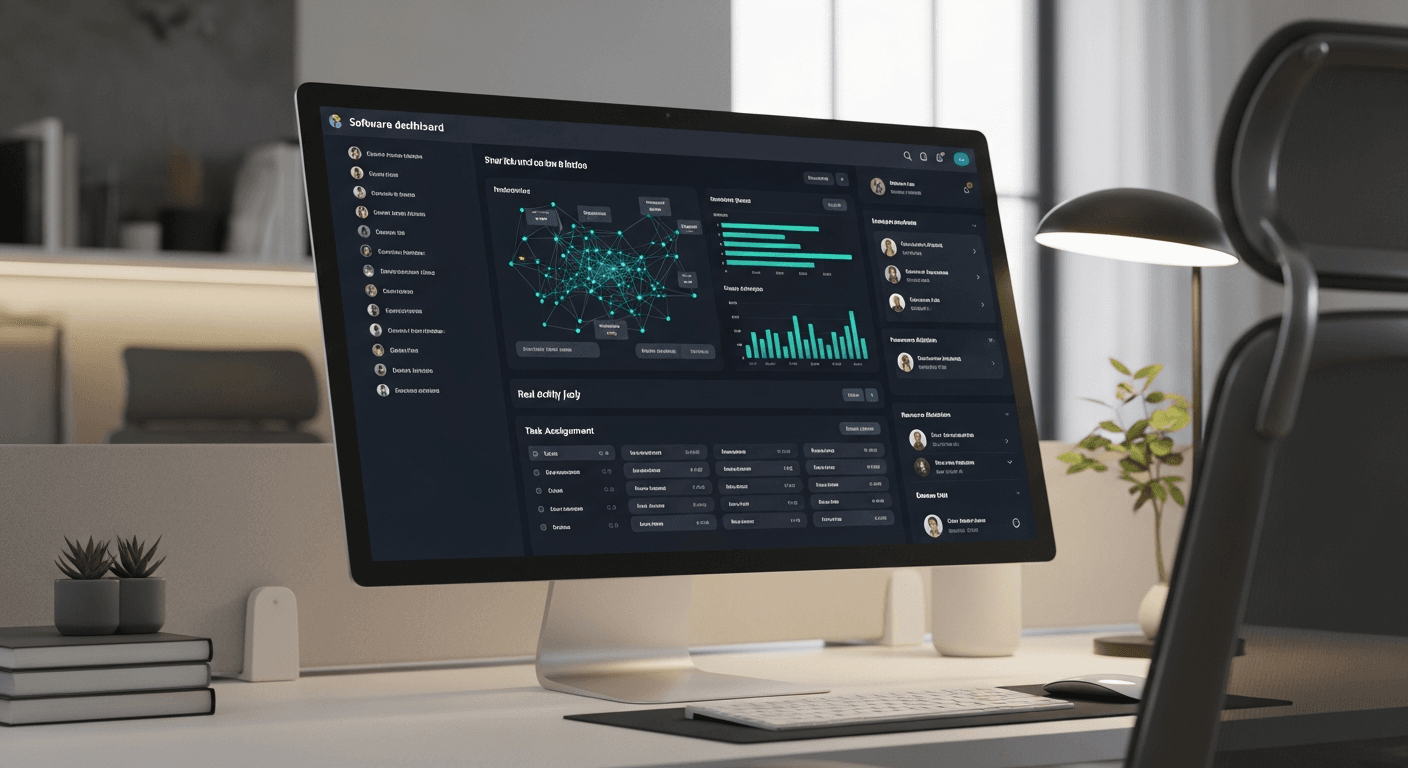
Have you ever felt the frustration of a software tool that seems to work against you rather than for you? In the current digital landscape, many companies in French-speaking Switzerland find themselves trapped by pre-packaged solutions. When an organization reaches a certain level of maturity, automation and data management needs become too complex for standard tools. This is precisely where the need for a **Geneva web app** designed specifically to handle unique workflows—that traditional WordPress agencies simply cannot manage—comes into play.
The context: when classic CMS reach their limits
Imagine a growing service company. For years, it used a WordPress site embellished with dozens of plugins to manage its bookings, invoices, and client tracking. Initially, it worked. But with increasing data volume and the complexity of business rules, the system began to slow down. The database became saturated, conflicts between extensions multiplied, and security became a major concern. This situation is typical of companies attempting to transform a content management tool into a full-fledged enterprise resource planning (ERP) system.
The custom development in Geneva is no longer a luxury, but a strategic necessity for these companies. Unlike a showcase website, a business web application is designed to handle critical data with specific business logic. Where WordPress imposes a rigid data structure (posts and pages), a custom web app allows for the optimal modeling of every entity (clients, contracts, stock, tasks), ensuring performance and scalability over the long term.
The transition from a CMS to a dedicated web app often marks the moment when a company regains total control over its digital assets and internal processes.
The challenge: automating unique business processes in Geneva
The main challenge lies in translating complex human processes into fluid algorithms. Take a classic scenario: a logistics company that must coordinate dozens of external stakeholders with different accreditation levels, all while generating real-time compliance reports. A standard CMS will fail on three crucial points:
- Data integrity: Ensuring that no input or synchronization errors corrupt financial or operational reports.
- User experience (UX): Offering a simplified, clutter-free interface where every click is optimized for employee productivity.
- Granular security: Managing extremely precise access rights, for example, preventing a subcontractor from seeing profit margins while still allowing them to log their hours.
Faced with these stakes, calling upon a web agency in Geneva specialized in custom solutions allows for a clear diagnosis. The challenge is not only technical; it is organizational. It is about understanding the 'why' of every step of daily work to eliminate repetitive, low-value tasks through a robust software architecture.
The solution: designing a high-performance web app
To meet the needs of Geneva, we favor an 'API-first' approach using modern technologies like Next.js and Node.js. This methodology allows for the total separation of business logic from the rendering engine, ensuring unprecedented execution speed. In the context of a web app, the emphasis is on the longevity of the code. We are not just building for today, but for the next ten years.
An architecture built for scalability
Unlike 'no-code' solutions or CMS that stack unnecessary layers of code, a custom web application is lightweight. It only loads what is necessary. By using frameworks like React, we create reactive interfaces where data updates instantly without reloading the page. For a Genevan company, this translates to massive time savings on every operation performed by staff.
Furthermore, integrating modern solutions like Next.js provides the best performance and native security. Each feature is tested and isolated, drastically reducing the risk of bugs during future updates.
The results: digital transformation and return on investment
The results of transitioning to a custom solution are often quickly quantifiable. Although the initial investment is higher than a simple website, the return on investment (ROI) is measured in hours of work saved and errors eliminated. For a typical company, automating an invoicing or scheduling process can represent savings of several days of work per month.
Observed benefits generally include:
- A drastic reduction in human error thanks to automatic data validation.
- Increased visibility for management thanks to real-time executive dashboards.
- Higher employee satisfaction due to modern, ergonomic, and fast tools.
- Total technological independence: you own your code and infrastructure.
In short, custom digital development is a strategic investment that adds value to a company's digital assets. In Geneva, where competition is fierce, software agility becomes a major competitive advantage, allowing you to react faster than those remaining on obsolete systems.
Key takeaways: why take the step toward custom solutions
The main lesson from our interventions is that technical debt is the worst enemy of growth. Postponing the development of an adapted tool means accepting to pay an 'inefficiency tax' every single day. To succeed in your web app project, it is essential to choose a partner who understands your business challenges as well as the code. At Studio Dahu, our expertise allows us to guide companies through this delicate but vital transition.
In conclusion, if your current site is holding back your ambitions or if you spend too much time reconciling Excel files, it is time to take it to the next level. The web is no longer just for communication; it has become the very infrastructure of your operational efficiency.
Frequently asked questions
What is the difference between a website and a web app?
A website is primarily informational (CMS), whereas a web app is an interactive tool designed to perform complex business tasks, manipulate data, and automate internal processes.
Why not use WordPress for my business application?
WordPress is excellent for content, but its limitations in terms of data structure and performance make it unstable and expensive to maintain for complex and evolving business needs.
How long does it take to develop a custom web app?
Depending on complexity, a project can take 3 to 6 months. This includes analysis, UX design, development, and rigorous testing phases.
Is a custom web app secure?
Yes, because unlike CMS, it does not use vulnerable third-party plugins. The code is audited and the architecture is designed to specifically meet your industry's security standards.